
Saint-Tropez is a village you explore on foot. It fits within a radius of about one kilometre, from the port to the Citadelle, and its key sights are just a few minutes’ walk from one another. The trick is knowing which ones to see, in what order, and at what time: in Saint-Tropez, good timing changes everything, especially in summer.
Here is our guide to the village, written from the heights of Gassin, a few minutes from the port. You’ll find what to see, the walking route, and the right day and hour for each place.

The essentials
- The village is best explored on foot, within a radius of about 1 km, from the port to the Citadelle.
- The must-sees: the port and its quays, the Ponche district (the old town), the Citadelle and its maritime history museum, the Musée de l’Annonciade (painting), the Musée de la Gendarmerie et du Cinéma (Louis de Funès) and the Place des Lices (market and pétanque).
- Allow half a day for the essentials on foot, a full day with the museums and the market.
- The right moment: a Tuesday or Saturday morning for the market, arriving before 9 a.m. when the port and the Ponche are empty, and ideally in May-June or September.
- Not to be missed on the sweet side: the Tarte Tropézienne, created here in 1955.
The village must-sees
| Place | Type | Visit time | Ticket | Good to know |
|---|---|---|---|---|
| The port and the quays | Stroll | 30 to 45 min | Free | Yachts, cafés, painters’ façades |
| Ponche district | Old town | 30 to 45 min | Free | Narrow streets, former fishermen’s quarter |
| Citadelle and maritime history museum | Monument and museum | 1 hr to 1 hr 30 | 5 € adult (free under 12) | View over the gulf, history of Tropezian sailors |
| Musée de l’Annonciade | Museum | 45 min to 1 hr | 5 to 6 € adult (free under 12) | Modern painting, pointillists and fauves |
| Musée de la Gendarmerie et du Cinéma | Museum | 45 min | 5 € adult (free under 12) | “Le Gendarme de Saint-Tropez”, Louis de Funès |
| Place des Lices | Square and market | 30 min, more on market days | Free | Market Tuesday and Saturday morning, pétanque |
| Maison des Papillons | Museum | 30 to 45 min | 2 € adult (free under 12) | Over 20,000 specimens, great with the family |
| Église Notre-Dame-de-l’Assomption | Religious building | 15 to 20 min | Free | Ochre bell tower, bust of the Bravades |
What to see in Saint-Tropez?
The places to see in Saint-Tropez are the port, the Ponche district, the Citadelle, the Musée de l’Annonciade, the Musée de la Gendarmerie et du Cinéma and the Place des Lices. They are all within walking distance of one another, in a radius of about one kilometre.
The order matters. A regular starts with the port and the Ponche early in the morning, climbs up to the Citadelle before the heat, keeps the museums for the afternoon and ends at the Place des Lices at the close of the day. The details of this sequence follow, right after the point that truly makes or breaks a visit: the right moment.
The right moment: which day, which hour, which season
The best time to visit Saint-Tropez: a Tuesday or Saturday morning for the market, arriving before 9 a.m. when the port and the Ponche are still empty, and ideally in May-June or September, away from the summer crowds. Most guides stop at the what to see. The when matters just as much.
By day of the week
| Day | What changes | The tip |
|---|---|---|
| Tuesday | Place des Lices market, in the morning | The day to aim for the market and the atmosphere |
| Wednesday to Friday | No market on the square, museums open | Ideal for quiet visits |
| Saturday | Market and peak crowds | The market in the morning, the sights early or late in the day |
| Sunday and Monday | Lively port, variable museum hours | Check opening times before you come |
Good to know: a small fish market is held on Place aux Herbes every morning. And in mid-May, the village lives to the rhythm of the Bravades, its traditional festival.
By time of day
| Time | Where to go | Why |
|---|---|---|
| Before 9 a.m. | Port, Ponche district | Empty streets and soft light, perfect for photos |
| Morning | Market (Tuesday, Saturday), museums at opening | Cool air and calm |
| Lunch | In the village | Before the 1 p.m. rush |
| Afternoon | Musée de la Gendarmerie, Annonciade, boutiques | Sheltered from the heat |
| 5 p.m. to 6 p.m. | The Citadelle | The view over the gulf in the late-day light |
| Evening | Aperitif on the port or Place des Lices | The Tropezian art of living |
By season
| Season | The atmosphere | Good to know |
|---|---|---|
| Spring (April to June) | The village wakes up, mild weather and few people | The Bravades in mid-May; the best window before the crowds |
| Summer (July and August) | Peak buzz, beaches and evenings out | Crowds and heat: arrive early, park far, favour morning and evening |
| Autumn (September, October) | Golden light, still-warm sea, calm restored | Les Voiles de Saint-Tropez, late September and early October |
| Winter (November to March) | Authentic village, crowd-free | Some restaurants and museums close: check opening times |
Our tip: if you were to remember just one rule, it would be this one. Arrive early. Before 9 a.m., the port still belongs to the fishermen and the delivery drivers, the Ponche is silent, and the light is the loveliest of the day.
Saint-Tropez in 1 day: the walking route
To visit Saint-Tropez in a day on foot: the port and the Musée de l’Annonciade in the early morning, the Ponche and the Citadelle late morning, lunch in the village, the afternoon for the Musée de la Gendarmerie and the boutiques, and the Place des Lices at the close of the day.
Start with the port, at the hour when it is still quiet, then push open the door of the Musée de l’Annonciade, right next door. Then head back up towards the Ponche through the narrow streets, and climb to the Citadelle: ten minutes uphill, rewarded by the view. Have lunch in the village, keep the afternoon for the Musée de la Gendarmerie and the boutiques, then finish at the Place des Lices, at the hour of pétanque and the aperitif. The whole route can be done without a car.
The port and the quays
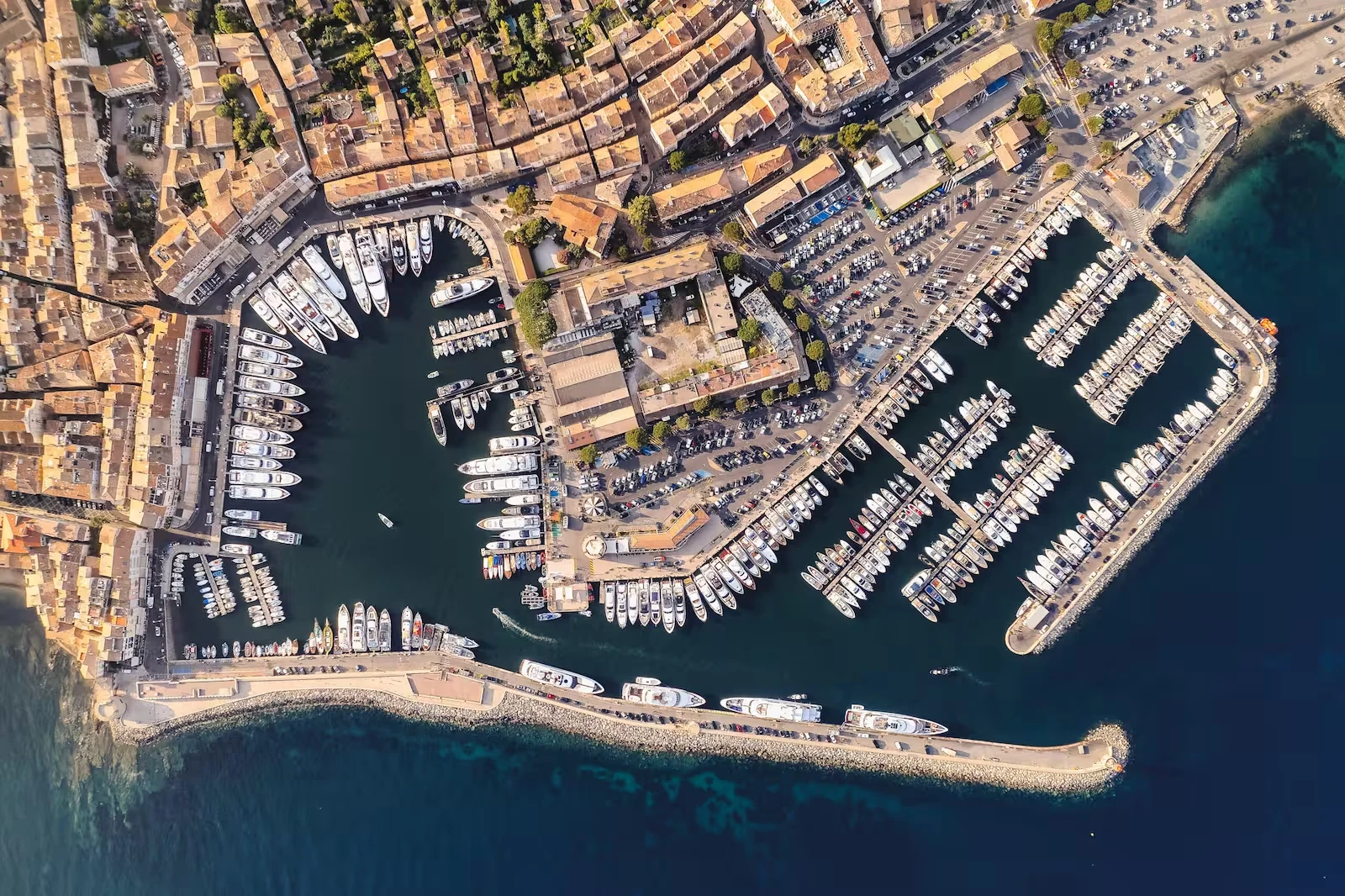
The port of Saint-Tropez is the heart of the village: quays lined with yachts, café terraces and ochre façades that Signac and the pointillists were already painting. This is where the village began, as a fishing port, before becoming the marina we know today.
Walk along the Quai Jean-Jaurès and the Quai Suffren, watched over by the statue of the Bailli de Suffren, an 18th-century Tropezian sailor. Further along the port, the statue of Brigitte Bardot recalls the village’s ties with cinema. Settle onto the terrace of Café Sénéquier, a Tropezian institution since 1930, to watch the boats come and go. For the wider view, walk out to the Môle Jean-Réveille, the breakwater that closes the port.
The Ponche district, the old town
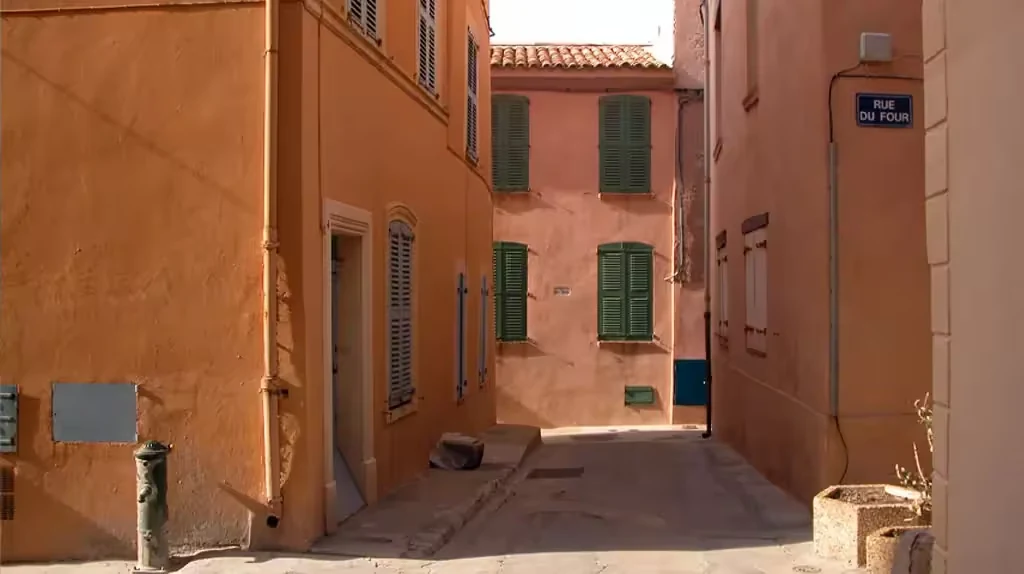
The Ponche is the oldest district of Saint-Tropez: the former fishermen’s quarter, its narrow streets, its little beach and the Tour Vieille. This is the Saint-Tropez of before the fame, and it has kept its village scale.
Lose yourself in the streets climbing up from the port, among the houses in ochre and pink tones. The little Ponche beach, just below, was the setting for the filming of “And God Created Woman” in 1956: it was this film, and Brigitte Bardot, that made the village known the world over. The district remains one of the calmest in the centre, especially in the morning.
The Citadelle and the maritime history museum
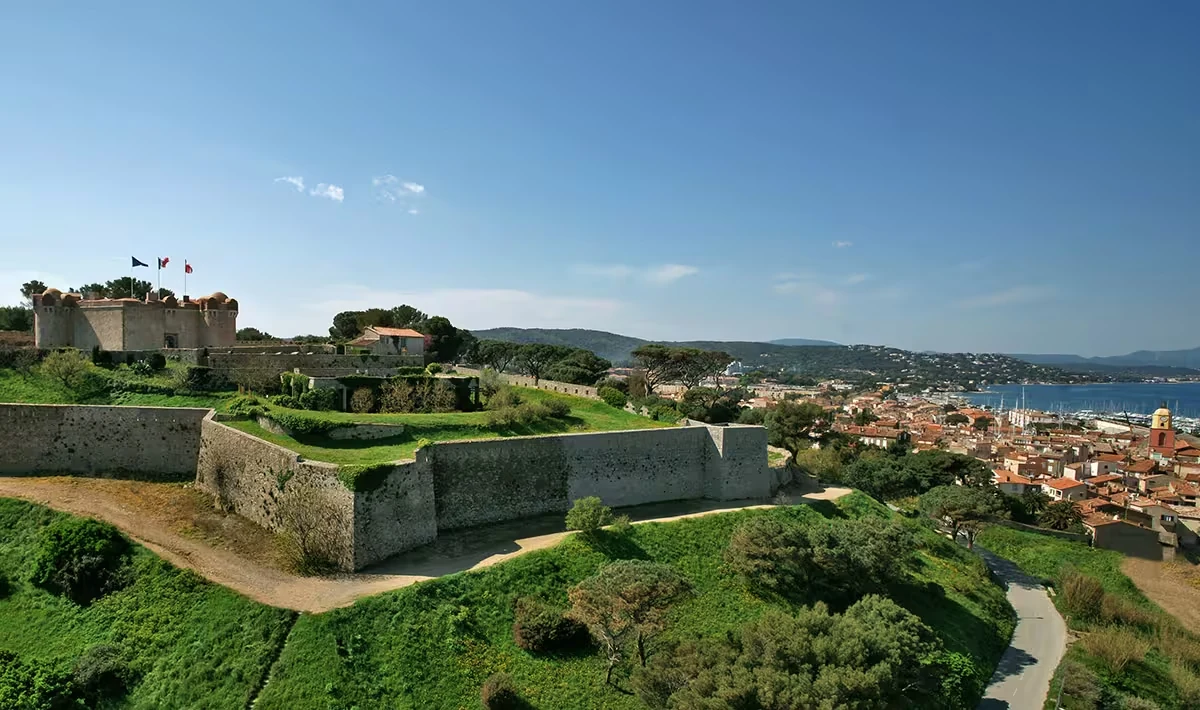
The Citadelle overlooks the village from the hill to the east: it is the only fortified monument in Saint-Tropez, and its keep houses the maritime history museum. People come as much for the collections as for the view, the finest over the gulf.
From the terrace, the gulf opens up in full, from the Maures to Sainte-Maxime, with the village rooftops below. Peacocks roam free on the glacis. Inside, the museum tells the story of the Tropezian sailors, from the time when Saint-Tropez was the third-largest French Mediterranean port. Allow a good hour, a little more with the museum. The ticket costs 5 € (adult rate), free for under-12s.
Our tip: go up in the late afternoon. The light is at its finest there, and the heat has dropped.
The Musée de l’Annonciade
The Musée de l’Annonciade, set in a former chapel on the port, gathers a collection of modern painting tied to the artistic history of Saint-Tropez. Here you’ll find Signac, Matisse, Bonnard, Marquet, Camoin, Cross and Derain, that is pointillism, the Nabis and Fauvism all together.
It is no accident. In 1892, the painter Paul Signac dropped anchor in Saint-Tropez and settled there. For a few decades the village became a hub of modern painting, and the Annonciade keeps its memory. The visit takes three-quarters of an hour to an hour. Admission is 5 or 6 € depending on the exhibition (adult rate), free for under-12s.
The Musée de la Gendarmerie et du Cinéma
The Musée de la Gendarmerie et du Cinéma occupies the former gendarmerie on Place Blanqui, the setting of the “Le Gendarme de Saint-Tropez” films with Louis de Funès. Opened to the public in 2016, it has become one of the most visited places in the village.
Inside you’ll find the world of the films, with Louis de Funès and his squad, and the history of the Tropezian gendarmerie. It is the other side of Saint-Tropez on screen: after the art of the Annonciade, popular culture. The visit takes about three-quarters of an hour, for a ticket of 5 € (adult rate), free for under-12s. It’s a good option with the family, or on a rainy day.
The Place des Lices: market, pétanque and terraces
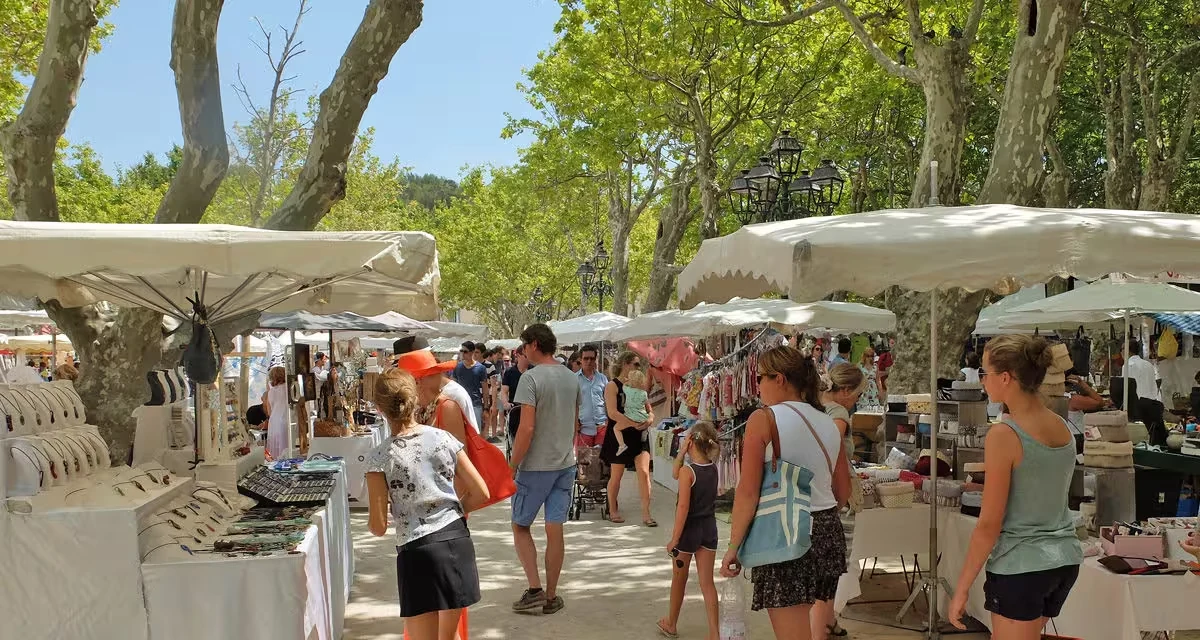
The Place des Lices hosts the market on Tuesday and Saturday morning, and the rest of the time remains the heart of Tropezian life: games of pétanque under the plane trees and café terraces. It is the square where the village comes together.
On market days, the plane trees shelter the stalls: fruit and vegetables, flowers, goat cheeses, soaps and straw hats. On other days, it’s the pétanque players who take over the square, in the shade. A small fish market is also held every morning, a stone’s throw away, on Place aux Herbes.
The church, the chapels and the towers
The Église Notre-Dame-de-l’Assomption, recognisable by its ochre bell tower, houses the bust of Saint Tropez carried during the May Bravades. In the Italian baroque style, it is the village landmark: its bell tower can be seen from the port and from the beaches.
Around it, a few places are worth the detour for those who take the time:
- The Chapelle Sainte-Anne, set apart from the centre, for its viewpoint over the gulf.
- The Chapelle de la Miséricorde, in the old town, and its dome of glazed tiles.
- The Maison des Papillons, the Dany Lartigue museum, which brings together more than 20,000 specimens: a short, surprising visit, one to do with the family.
- The rampart towers, the Tour du Portalet, the Tour Vieille and the Tour Jarlier, remnants of the village’s fortifications.
The Tarte Tropézienne, the sweet must-try
The Tarte Tropézienne is the specialty of Saint-Tropez: a sugar-crusted brioche filled with cream, created in 1955 by the pastry chef Alexandre Micka and named on an idea from Brigitte Bardot during the filming of “And God Created Woman”. It has become the village’s sweet souvenir.
You can enjoy it on the spot or take it away, at the historic shop in the village as well as in several patisseries. One slice is enough to understand why it has endured through the decades.
And the villages of the surrounding gulf
Around Saint-Tropez, three villages can be visited in half a day: Gassin and Ramatuelle, perched on their hills, and Grimaud with its lakeside town of Port-Grimaud. Each offers another face of the gulf, quieter and more Provençal.
- Gassin, listed among the Most Beautiful Villages of France, overlooks the gulf at around 200 metres in altitude. Here you’ll find the Androuno, one of the narrowest streets there is, and a panorama that stretches to the Maures.
- Ramatuelle, also a hilltop village, keeps its 16th-century church and its Porte Sarrasine. It is the municipality of Pampelonne beach.
- Grimaud keeps watch from the ruins of its 11th-century castle, and its modern extension, Port-Grimaud, unfurls its canals like a Provençal Venice.
How much time to plan for?
Allow half a day for the village on foot, a full day with the two museums and the market, and two days to add the surrounding villages. It all depends on your pace and your appetite for museums.
A rainy day doesn’t spoil the visit: the museums of the Annonciade, the Citadelle and the Gendarmerie can be visited under cover, and the village lends itself to strolling beneath the arcades. For the details of the right day and the right hour, refer to the planner above.
Practical info: access, parking, shuttle
The village can only be explored on foot: leave the car at the Port, Lices or Nouveau Port car park, and come early in summer to avoid the crowds. Traffic and parking are the only real friction point of a visit to Saint-Tropez.
To avoid the car, two options by sea: the sea shuttle from Sainte-Maxime and the crossing from Cannes. On the calendar side, three events mark the year: the Bravades in mid-May, the Fête de la Musique on 21 June, and Les Voiles de Saint-Tropez in late September and early October.
Where to stay to visit the village
To range across the village and the gulf without dealing with parking, it’s better to stay a few minutes from the centre. That is the position of the Kube Hotel Saint-Tropez, on the heights of Gassin: a quiet starting point, with its 70 rooms and villas, its three pools, its myBlend spa and its Le Petit Célestin rooftop. A shuttle links the hotel to the village and the beaches, so you can leave the car in the car park.
To prepare your visit
Two things make the difference: aim for a Tuesday or Saturday morning for the market, and arrive early. The rest, the village takes care of. If you stay more than a day, keep half a day for Gassin or Ramatuelle, and book your table in the village first thing in the morning during high season.
FAQ
The port, the Ponche district, the Citadelle and its maritime museum, the Musée de l’Annonciade, the Musée de la Gendarmerie and the Place des Lices. They are all within walking distance of one another, in a radius of about one kilometre.
The village on foot in the morning (port, Ponche, Citadelle), a museum or the market at midday, then the Place des Lices at the close of the day.
Half a day for the essentials on foot, a full day with the two museums and the market.
The Ponche, the former fishermen’s quarter, for its narrow streets and its little beach set apart from the port.
A Tuesday or a Saturday, for the Place des Lices market in the morning; on weekdays, the village is quieter and the museums are open.
Before 9 a.m., when the port and the Ponche are still empty; keep the Citadelle for the late afternoon, for the light over the gulf.
The three museums (Annonciade, maritime history at the Citadelle, Gendarmerie et Cinéma) can be visited under cover.
Enjoy the village crowd-free (port, Ponche streets, Citadelle) and the museums; some restaurants and establishments close out of season, to be checked before you come.
Yes: the former gendarmerie, on Place Blanqui, has housed the Musée de la Gendarmerie et du Cinéma since 2016.
Gassin and Ramatuelle, perched on their hills, and Grimaud with the lakeside town of Port-Grimaud, all less than twenty minutes away.
At the Port, Lices or Nouveau Port car parks; in summer, arrive early or favour the sea shuttle.